



Vipassana Meditation
as taught by S.N. Goenka
in the tradition of Sayagyi U Ba Khin
Vipassana means to see things as they really are. It is one of India's most ancient techniques of meditation, taught in ten-day residential courses that are open to all and free of charge.

The wheel of Dhamma was set in motion when the Buddha first taught.
It keeps turning wherever the technique is practised and passed on.
A practical path, walked step by step
Vipassana is a way of self-transformation through self-observation. It is universal and non-sectarian, and people of every background practise it. A course follows three trainings, each resting on the one before.
- Sīla Moral conduct
- Five precepts kept for the length of the course. They steady the mind enough for it to be observed.
- Samādhi Concentration
- Ānāpāna: attention on the natural breath as it comes in and goes out, practised for the first three and a half days.
- Paññā Wisdom
- Vipassana itself: observing sensations throughout the body with equanimity, and understanding their changing nature by direct experience.
Begin with a ten-day course
The ten-day course
Ten days of guided practice in noble silence. The first step for every student.
How a course worksCode of Discipline
The rules that protect each student's practice. Read them before you apply.
Read the CodeFind a centre
More than 180 centres worldwide, each offering the same course, free of charge.
Search centresThere is no charge for teaching, food or lodging. Each course is a gift from students who came before, and teachers and servers give their time freely.
The first step is the breath
Ānāpāna is the observation of natural breathing. It calms and concentrates the mind, and it can be learned by anyone aged ten or above. Mini Anapana is a short session guided by Goenkaji, free in more than thirty languages.

Handed down in its purity
The technique has reached us through an unbroken line of teachers, each of whom practised it deeply and passed it on unchanged. The Institute remembers them with gratitude.
 Gotama the Buddha624–544 BCERediscovered Vipassana and taught it for forty-five years.Ven. Ledi Sayadaw1846–1923The scholar-monk who opened the practice to lay people in Myanmar.Saya Thetgyi1873–1945A farmer who became the first lay teacher in the lineage.Sayagyi U Ba Khin1899–1971A senior civil servant who taught at the International Meditation Centre, Yangon.Shri S.N. Goenka1924–2013Brought Vipassana back to India in 1969, and from there to the world.
Peace in the individual, peace in society
The same ten-day course has been taken into prisons, schools, government offices and boardrooms.
From the Institute
- S.N. Goenka Ji birth centenary celebrationsThe birth centenary year of Shri S.N. Goenka is marked, with a short biography of Goenkaji.
- Online Pāli–English certificate course 2021–22An eight-month online course from VRI covering Pāli grammar and suttas from the Tipiṭaka.
- Certificate course in the Buddha's teachings and Vipassana, second batchA second online batch offered with Symbiosis University, open to meditators and non-meditators.
- New features in the Vipassana Meditation mobile appCourse registration across centres, application tracking and a daily meditation log, first on Android.
Read, listen, study
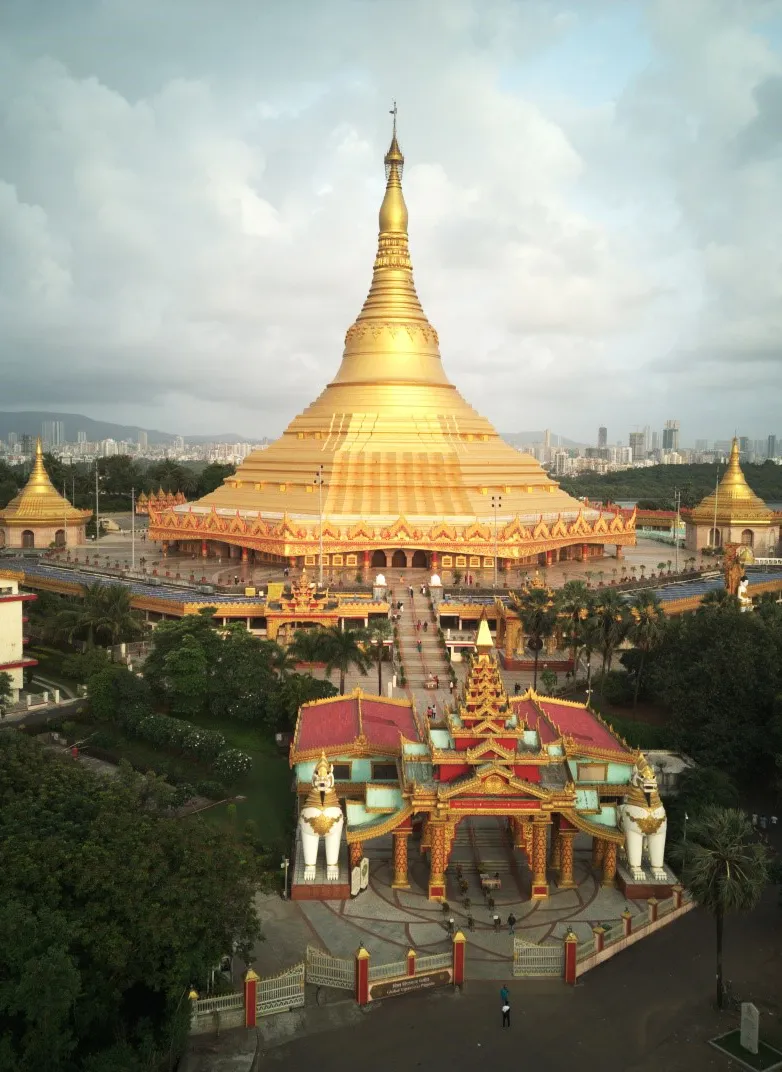
Given freely, so that others may benefit
Neither the Institute nor any centre charges for the Dhamma. The work continues through the gratitude of those who have benefited from it.
Bhavatu sabba maṅgalaṃ