Children's courses teach Ānāpāna, the observation of natural breathing. It is the first step of Vipassana, it is easy to learn, and it gives children a tool they can use for the rest of their lives.
What happens on a course
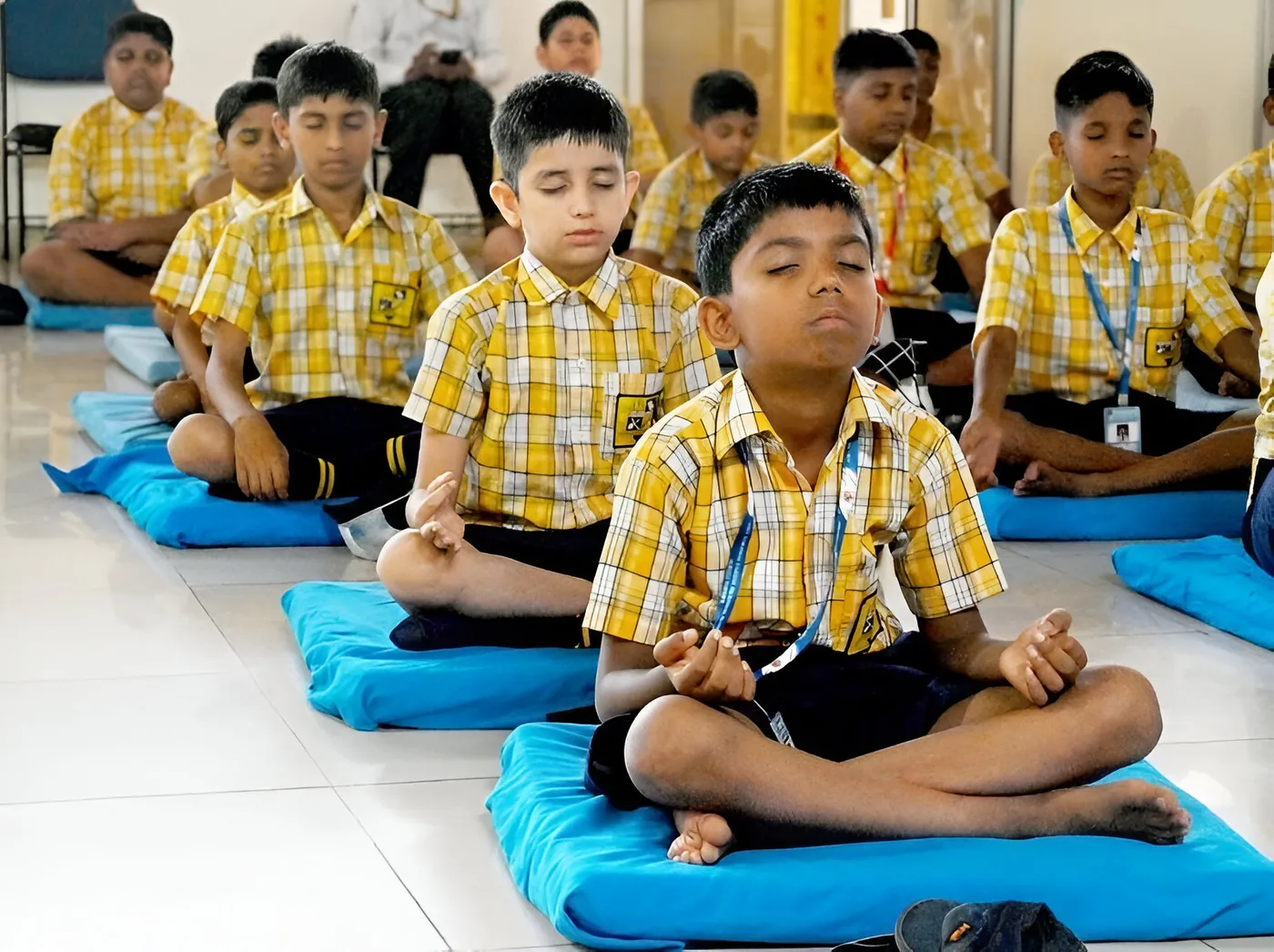
Courses last one, two or three days. One-day courses are non-residential, and longer ones are usually held at Vipassana centres with boys and girls housed separately. Short periods of meditation alternate with supervised play, drawing, stories and discussion. The meditation instructions are given through recordings of Goenkaji, and trained children's-course teachers guide the day.
Children undertake five simple precepts for the course and follow a code of conduct. The course ends with a short practice of mettā, in which they wish happiness to all.
What parents and teachers notice
Parents and teachers commonly report better concentration and memory, calmer behaviour and more self-confidence. Children are encouraged to keep up the practice for ten to fifteen minutes each morning and evening.
How to register
- Read the code of conduct and sample timetableBoth are on vridhamma.org and explain what the child will be asked to do.
- Choose a place and dateSee the children's course schedule.
- Contact the centreEach centre has its own registration procedure.
All children's courses are free of charge and run on voluntary donations.